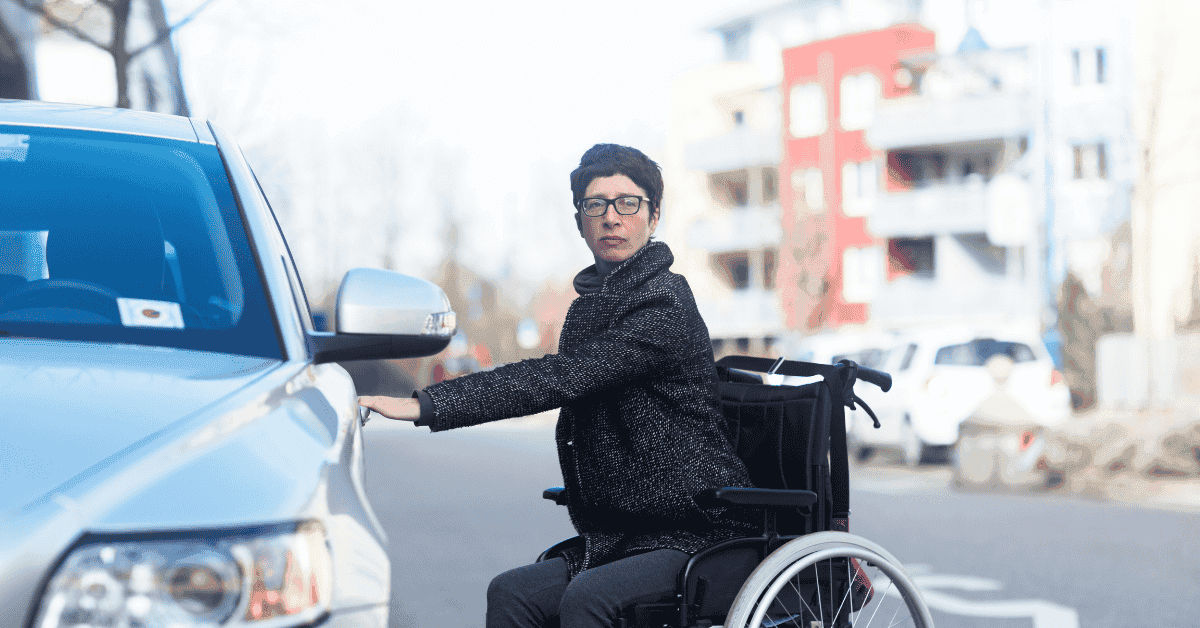
Thieves are stealing disabled parking permits from cars across Denmark, leaving wheelchair users and people with severe mobility impairments stranded without access to their jobs, doctors, and daily life. Disability advocates say the crime should be met with tougher enforcement and basic decency, not bureaucratic crackdowns on disabled people themselves.
I have watched Denmark wrestle with many policy dilemmas during my years here, but few feel as quietly cruel as the one unfolding around disabled parking permits. The blue healthcare placards displayed in car windshields are meant to guarantee mobility for people whose bodies cannot manage ordinary distances. Now they have become targets for thieves who see a free pass to inner-city parking.
According to Danske Handicaporganisationer, roughly 140,000 handicapparkeringskort are currently active in Denmark. These are not perks. They are issued only after medical documentation of stærkt reduceret gangdistance or disabilities that make standard parking physically impossible. For many holders, the card is the difference between getting to work and staying home.
The Scale of the Problem
Over the past two years alone, DH received 762 reports of stolen permits. The real number is almost certainly higher. Many thefts go unreported because victims prioritise ordering a replacement over filing a police report, and Danish law enforcement does not track handicap permit theft as a separate category.
The pattern is clear. Cars are broken into near hospitals, shopping centers, and train stations where parking is expensive and scarce. Stolen permits are then resold online or simply used by people who want convenience without consequence. Social media groups trading stolen cards pop up, get shut down, and reappear under new names.
Why It Happens
Copenhagen parking fees have climbed steadily for years. A valid disabled permit offers free or privileged parking across the city. The economic incentive is obvious. Enforcement is not. Parking attendants can check if a card’s serial number is valid, but they cannot easily verify whether the person using it actually has the documented impairment that justified its issuance.
The permit follows the person, not the vehicle. That design is intentional, allowing disabled people to travel in taxis or with friends. It also makes misuse harder to detect. Unless an officer demands ID and cross-checks it against a registry, a stolen card can circulate for months.
Who Really Gets Hurt
When a card is stolen, the bureaucratic replacement process begins. The rightful owner must report the theft, apply for a new permit, and wait. Meanwhile, they lose access to the infrastructure Denmark claims to guarantee under its welfare system and international disability rights obligations.
Someone might cancel a rehabilitation appointment because they cannot park near the clinic. Another might reduce work hours because commuting becomes unmanageable. Parents might skip picking their kids up from school. These are not hypotheticals. As noted by DH director Katrine Mandrup Tang, misuse does not just steal parking spaces. It closes off access to society itself.
The psychological toll compounds the practical one. Being targeted because of visible disability reinforces the sense that Danish society still sees disabled people as burdens or outsiders, despite years of inclusion rhetoric.
The Wrong Response
DH warns that public frustration over misuse could lead to the wrong policy fixes. Shorter validity periods, more frequent medical reassessments, and complex verification systems might sound like solutions. In practice, they punish legitimate users while doing little to stop determined criminals.
I have seen this pattern before in Danish policymaking. A problem emerges among a vulnerable group, and the instinct is to tighten rules across the board rather than target enforcement at actual wrongdoers. It happened with cash welfare reforms and with pension verification processes. The disabled community fears it will happen again here.
What Should Change
DH frames the solution around anstændighed, decency. That is both a moral appeal and a practical one. Many misusers are not organised criminals but ordinary people who borrow a relative’s card for a quick errand or buy a stolen one online without considering the human cost.
Public awareness campaigns could help, similar to anti-drunk-driving efforts during julefrokost season. So could visible enforcement. When parking officers conduct targeted checks at known problem spots, misuse drops. The challenge is sustaining that effort across municipalities with varying resources and political will.
Technology offers partial answers. Some EU countries now embed QR codes or chips in permits that enforcement officers can scan instantly. Photo ID on the front of the card makes misuse riskier. Digital registries allow real-time verification. But every security layer risks creating new barriers for disabled users, especially older people or those without smartphones.
A Broader Failure
The handicap permit debate reflects a deeper tension in Danish society. This is a country that prides itself on universal design and social trust. Yet when that trust is exploited, the reflex is often to restrict access rather than invest in enforcement or education.
The lack of hard data compounds the problem. Police do not track these thefts systematically. DH has case reports but no national overview. Policymakers are left making decisions in a statistical fog, vulnerable to anecdote and emotion rather than evidence.
What Denmark needs is straightforward. Better theft tracking. Stronger but fair enforcement. Security measures designed with disabled users at the table, not as an afterthought. And yes, a bit of basic decency from the rest of us who take mobility for granted.