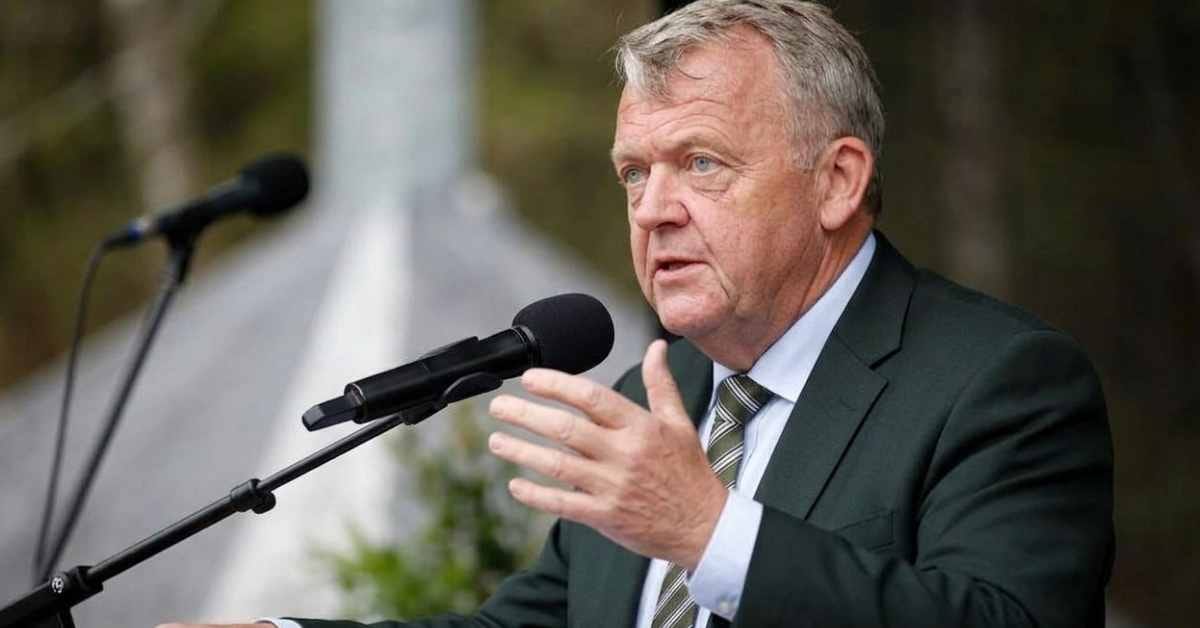
Former Danish Prime Minister Lars Løkke Rasmussen has dismissed Venstre’s proposal for a purely right-wing government as “a trial balloon that cannot fly,” dealing a sharp blow to party leader Troels Lund Poulsen’s attempt to reunite the blue bloc without the Moderates.
The plan looked ambitious on paper. After receiving a brief exploratory mandate from the Queen, Troels Lund Poulsen announced he would attempt to form a minority government consisting of Venstre, Liberal Alliance, and the Conservatives. The so-called VLAK model would need external support from New Right, the Danish People’s Party, and possibly the Denmark Democrats. It was framed as a clear right-wing alternative to the current SVM coalition government that includes the Social Democrats, Venstre, and the Moderates.
But Lars Løkke Rasmussen, who founded the Moderates to break Denmark’s traditional bloc politics, was not impressed. As reported by DR, Løkke called the proposal unrealistic both politically and parliamentarily. His criticism went beyond policy disagreements. He questioned the entire process, calling it peculiar that such a sweeping government proposal would emerge from such a short exploratory mandate.
A Narrow Parliamentary Base
The fundamental problem with VLAK is the math. Even combined, Venstre, the Conservatives, and Liberal Alliance do not command a majority in the Folketing. That means every budget, every reform, every major initiative would require approval from parties on the far right. New Right and the Denmark Democrats hold crucial votes, and both have proven willing to make ultimatums.
I have watched Danish coalition politics long enough to know that dependence on fringe parties rarely ends well. The Denmark Democrats were founded by Inger Støjberg after her impeachment and exit from Venstre. The relationship remains tense. New Right demands strict immigration policies and lower public spending. These are not natural partners for a pragmatic center-right party like Venstre.
Løkke’s criticism focuses on exactly this vulnerability. He argues that a government constantly negotiating with its own support base cannot deliver the stable, cross-aisle solutions Denmark needs on climate, defense, and EU commitments. The country has committed to a 70 percent emissions reduction by 2030 and two percent of GDP for NATO defense spending. These require broad, long-term agreements that transcend bloc politics.
Venstre’s Gamble
So why did Troels Lund Poulsen propose VLAK at all? The answer likely lies in Venstre’s polling crisis. The party has hemorrhaged voters to Liberal Alliance, the Conservatives, and the Denmark Democrats since joining the SVM government. Many traditional blue-bloc voters felt betrayed when Venstre chose to govern with the Social Democrats.
The VLAK proposal signals to those voters that Venstre is ready to reclaim leadership of the right. It is a message that says: we have not forgotten who we are. But as several political commentators noted, the proposal also functions as a negotiating tactic. By putting a pure right-wing model on the table, Venstre can pressure both the Social Democrats and the Moderates to offer more concessions if they want to maintain a broad coalition.
Troels Lund Poulsen himself acknowledged the compressed timeline. He admitted there had been little time for detailed negotiations between the three parties, but insisted there was “political will” to try. That phrase, political will, does a lot of work. It suggests commitment without guaranteeing competence.
Internal Tensions Among Right-Wing Parties
Even if the VLAK parties agreed in principle, significant policy differences remain. The Conservatives position themselves as green and pro-European. Liberal Alliance is skeptical of climate regulation that could harm business competitiveness. Venstre has historically tried to split the difference, but that balancing act has become harder as the party’s identity blurs.
On EU policy, there are also nuances. The Conservatives strongly support deeper integration. Liberal Alliance is more cautious about regulation from Brussels, especially on tech and agriculture. These differences may seem minor now, but they become flashpoints during actual governance, particularly when external support parties demand harder lines.
The Moderates’ Counterattack
Løkke’s harsh dismissal of VLAK is not just ideological. It is also strategic. The Moderates were founded before the 2022 election explicitly to promote center governments that bridge left and right. The SVM coalition was proof that the model could work, even if it cost Venstre dearly in the polls.
By calling VLAK a trial balloon, Løkke defends the center-government concept and reminds voters that stable majorities require broad compromises. He positions the Moderates as the responsible adult in the room, the party that will not gamble with Denmark’s stability for short-term political advantage.
The Moderates also fear being sidelined. If a pure right-wing government could secure a majority, the Moderates would lose their kingmaker role. That makes Løkke’s critique both principled and self-interested. He is fighting to preserve his party’s relevance as much as to preserve centrist governance.
What Happens Next
For now, VLAK appears dead in the water. Both Liberal Alliance and the Conservatives expressed sympathy for a right-wing government but stopped short of committing to the specific model. Neither party wants to be blamed if the experiment collapses. And the potential support parties have given no clear signals of backing the plan.
The Social Democrats, meanwhile, are delighting in the chaos. They have used the VLAK proposal to warn against instability and experimentation on the right. By contrast, they present themselves as the steady hand that can work with anyone. It is effective messaging, especially when your opponents are publicly fighting over who gets to lead them.
The left-wing parties, SF and the Red-Green Alliance, have dismissed VLAK as a dangerous right-wing experiment. But privately, they may welcome the disarray. A fractured blue bloc makes it easier to paint the right as unserious and divided.
This whole episode illustrates the tension at the heart of Danish politics right now