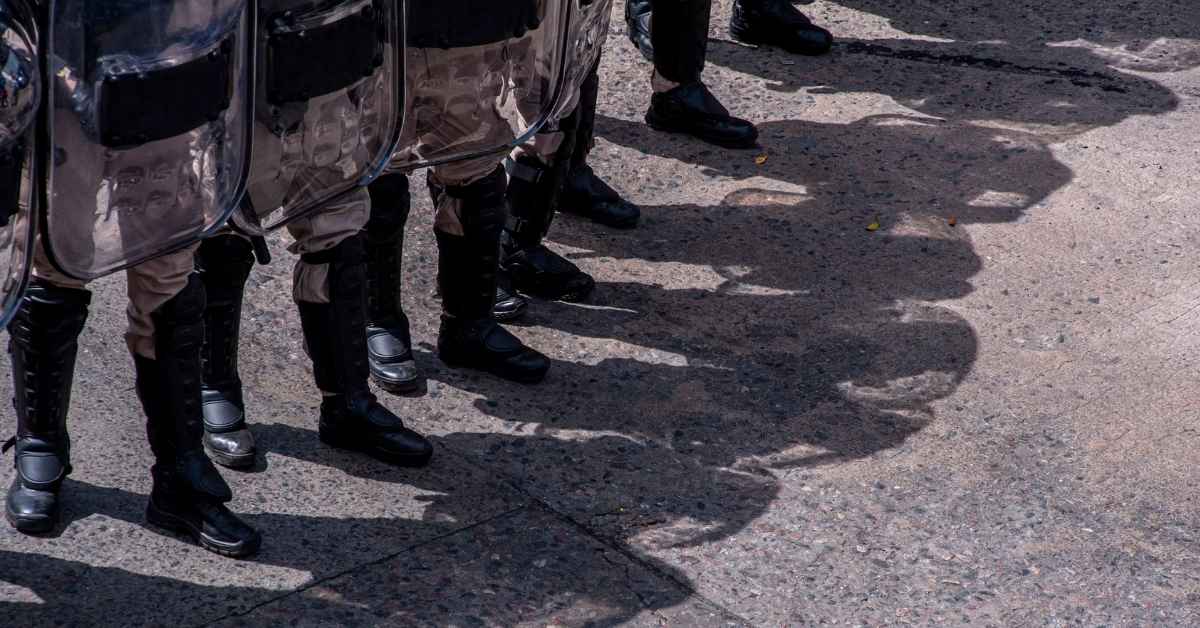
Danish police are under fire after officers used batons against seated protesters in Copenhagen, prompting a senior legal scholar to warn that the force’s conduct marks a worrying defeat for Denmark’s demonstration culture.
A video circulating online shows police officers striking protesters who were sitting on the ground during a demonstration in the capital. The incident has triggered sharp criticism from academics and activists who argue that Danish police crossed a line that threatens the country’s tradition of peaceful assembly. As reported by DR, a lecturer in law has described the police response as a defeat for Danish protest culture.
When Police Escalate
The protesters were sitting down when officers began using batons to clear them. According to the legal scholar quoted in the report, this type of force against non-violent demonstrators represents a significant shift in how Danish police handle protests. The concern is not just about this single incident but about what it signals for future demonstrations.
I have watched protests in Copenhagen for years. The Danish approach has generally been hands off compared to many other countries. Police presence is visible but usually restrained. That tradition now feels less secure.
A Pattern Taking Shape
This is not happening in isolation. East Jutland Police recently faced criticism for alleged case washing, a scandal that raised questions about accountability within the force. And Danish police have been deployed to Greenland as geopolitical tensions rise following Trump’s renewed interest in the territory.
The common thread is a police force under pressure and increasingly willing to use force. Whether that pressure comes from political expectations, resource constraints, or shifting institutional culture is unclear. What is clear is that the gap between Danish self-image and reality is widening.
The Legal Question
Danish law allows police to use necessary force to disperse unlawful gatherings. The key word is necessary. Seated protesters pose no immediate physical threat. They are engaging in passive resistance, a form of civil disobedience with deep roots in democratic protest.
The legal scholar’s criticism hinges on proportionality. Using batons against people sitting on the ground is difficult to justify under that standard. It suggests that police are prioritizing rapid clearance over measured response. That choice has consequences for how Danes and foreigners alike view the right to protest here.
What This Means for Expats
If you live here and participate in protests, or simply care about civil liberties, this matters. Denmark markets itself as a liberal democracy with strong human rights protections. That reputation is built on practices like restrained policing and respect for assembly. When those practices erode, the lived reality diverges from the branding.
For expats from countries with harsher protest policing, Denmark may still look gentle. But the direction of travel is concerning. A culture of protest is fragile. Once police normalize force against peaceful demonstrators, it becomes harder to walk that back.
Where This Goes Next
The incident will likely prompt calls for an investigation. Whether the National Police or the Independent Police Complaints Authority takes it seriously remains to be seen. Danish institutions have a mixed record on accountability when it comes to police conduct.
What is certain is that this moment will be remembered. The footage exists. The criticism from legal experts is on the record. And the question now is whether Danish society pushes back or accepts this as the new normal.
I hope it is the former. But hope is not a strategy.
Sources and References
DR: Et nederlag for dansk demonstrationskultur
The Danish Dream: Greenland rejects Trump’s plans for autonomy
The Danish Dream: Danish police fly to Greenland as U.S. visit sparks tensions
The Danish Dream: East Jutland Police under fire for case washing