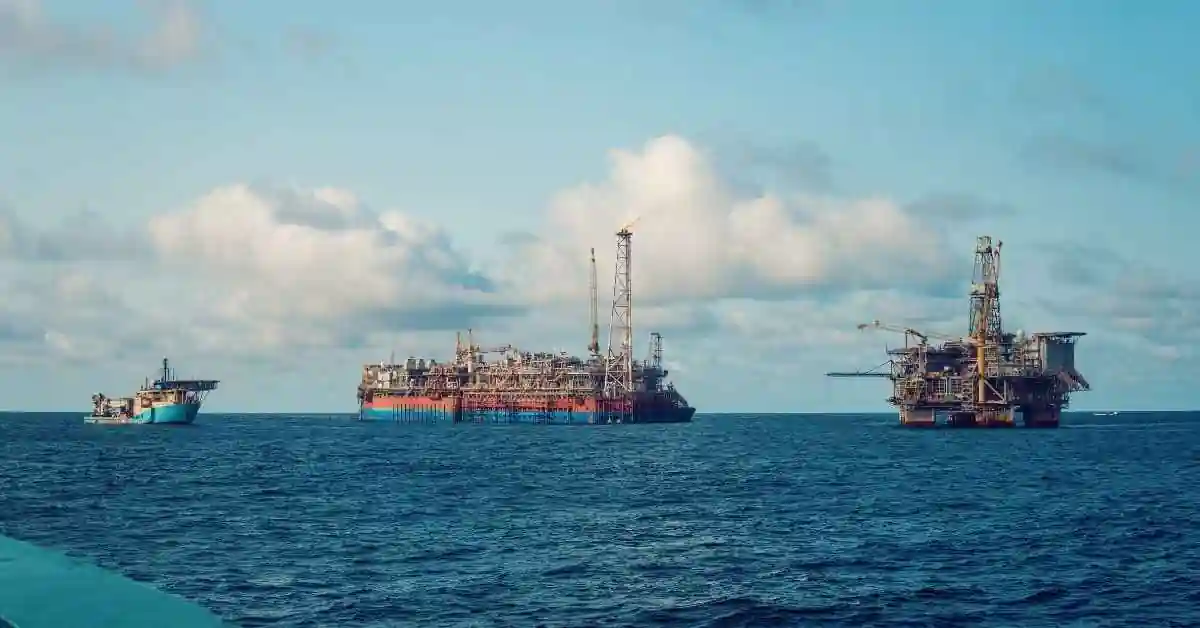
Denmark is considering extending North Sea oil and gas production licenses until 2050 to strengthen European energy security, even as global oil crises strain supplies and drive up fuel prices. The move balances immediate energy needs against long term climate commitments.
Denmark faces a complex energy dilemma in 2026. Global oil markets are in turmoil, emergency reserves offer only temporary relief, and fuel prices continue climbing. At the same time, the Danish government is exploring whether to extend domestic oil and gas production far into the future. The decision weighs energy independence against environmental goals.
Emergency Oil Reserves Provide Limited Relief
The global oil situation has created urgent challenges for energy security. Iran’s blockade of the Strait of Hormuz has cut off 20 million barrels of daily oil flow from the Persian Gulf. Western nations responded by releasing record amounts from strategic reserves, but experts warn this offers only short term help.
Strategic Reserves Face Physical Constraints
The world’s largest oil reserves sit underground in salt caverns in Texas and Louisiana. The United States promised to release 172 million barrels, more than 27 billion liters of crude oil. However, the physical process of extracting oil from these salt formations creates a bottleneck.
Energy Minister Chris Wright announced it will take 120 days to release the full amount. The salt cavern storage system, while environmentally safe and cost effective for long term storage, cannot pump oil quickly enough to replace the missing supply from the Middle East. Only a few million barrels per day can be extracted, far short of what typically flows through the Strait of Hormuz.
Reserves Offer Symptom Treatment Not Cure
Analysts describe the reserve releases as symptom treatment rather than a cure for the underlying crisis. Arne Lohman Rasmussen from Global Risk Management notes the approach relieves immediate pressure but may not address root problems. The reserves buy time but cannot fully compensate for blocked Middle Eastern exports.
Jens Nærvig Pedersen from Danske Bank emphasizes the practical limitations. Even with massive reserves available, the inability to load oil onto tanker ships at normal speeds prevents full replacement of lost supply. The infrastructure simply cannot move reserve oil fast enough to meet global demand during this crisis.
Fuel Prices Hit Consumers Harder Than Crude Oil Costs
Danish consumers face mounting costs at the pump that exceed the increase in crude oil prices. The crisis has revealed a particular vulnerability in refined petroleum products like gasoline, diesel, and jet fuel. These processed fuels cannot be replaced as easily as crude oil from emergency stockpiles.
Refined Products Trapped Behind Blockade
A quarter of all shipping through the Strait of Hormuz carries refined petroleum products, not crude oil. Middle Eastern nations operate large refineries that process crude oil into gasoline, diesel, and aviation fuel. European buyers depend heavily on these refined products.
The blockade traps these valuable processed fuels inside the Persian Gulf region. Saudi Arabia’s largest refinery suffered drone attacks from Iran, further reducing supply. Meanwhile, China has chosen to keep its refined products for domestic use rather than export them. This combination creates acute shortages of the fuels consumers actually use.
Price Increases Exceed Crude Oil Gains
Market data shows diesel, gasoline, and especially jet fuel prices rising faster than crude oil costs. This reflects the specific shortage of refined products trapped by the blockade. Rasmussen points out that unlike crude oil reserves, there are no large stockpiles of refined fuels to release.
The three leading commodity analysts in Denmark agree that fuel prices will likely continue climbing if the Middle East crisis persists. Ole Sloth Hansen from Saxo Bank warns that only significantly higher prices will reduce consumption enough to balance supply and demand. This mirrors what Europe experienced during the gas crisis following Russia’s invasion of Ukraine.
Denmark Reconsiders North Sea Production Timeline
Against this backdrop of energy insecurity, Denmark announced in February 2026 that it would examine extending one or more North Sea oil and gas licenses until 2050. The move responds directly to European energy vulnerability exposed by recent geopolitical conflicts. Energy Minister Lars Aagaard emphasized that the Ukraine war demonstrated how energy becomes a weapon in the wrong hands.
Tyra Field At Center Of Extension Debate
The Tyra field represents Denmark’s most significant North Sea asset. As the country’s largest gas field and the hub for the Danish Underground Consortium, Tyra currently holds a license expiring in 2042. The government is now asking operators to explore extending production until 2050.
Tyra restarted operations in March 2024 after upgrades that reduced carbon dioxide emissions by 30 percent. The modernized platform ranks among the most energy efficient offshore facilities globally. Production from the field contributes significantly to Denmark’s overall output, which reached 50,000 barrels of oil and 3.7 million cubic meters of gas daily in 2024.
Production Doubled As Security Concerns Grow
Danish North Sea production surged in 2024. Oil output increased 6 percent to 4.1 million barrels, while gas production jumped 25 percent to 2.5 million megawatt hours. The increases came from Tyra’s restart and the new Solsort West field, which alone provided about 10 percent of Denmark’s oil in 2024.
Nordsøfonden, the state owned subsurface company, reported strong financial results. The entity earned 498 million kroner in profit for 2024, paid 272 million kroner in taxes, and distributed 600 million kroner in dividends to the state. Chairman Christian Frigast noted that production was expected to double in 2025, further strengthening supply security.
Balancing Climate Goals With Energy Security
The license extension proposal creates tension between Denmark’s climate commitments and energy security needs. The government must reconcile its 2045 carbon neutrality target and 70 percent emissions reduction by 2030 with potentially extending fossil fuel production another eight years beyond the Tyra field’s current license.
North Sea Agreement Sets Framework
Any extensions must comply with the 2020 North Sea Agreement. That landmark deal ended new licensing rounds for oil and gas exploration while setting a firm 2050 deadline for complete fossil fuel phase out. The agreement already represented a compromise between environmental advocates and energy security concerns.
The government emphasizes that extending existing licenses differs from issuing new ones. Industry Minister Morten Bodskov stated that Europe must stand on its own two feet regarding energy supply. The extension discussions focus on maximizing production from already discovered and licensed fields rather than exploring new areas.
European Demand Projections Support Extensions
International Energy Agency forecasts show European Union gas demand declining from 330 billion cubic meters in 2023 to 165 billion by 2050. This long term reduction supports the argument that extended Danish production serves as a bridge fuel during the energy transition rather than a permanent commitment to fossil fuels.
The Danish Underground Consortium operates through a partnership of TotalEnergies with 43.2 percent, BlueNord with 36.8 percent, and Nordsøfonden with 20 percent. Government officials are conducting dialogue with these operators and other North Sea Agreement parties to assess market needs and security implications before making final decisions.
Carbon Storage Offsets Continued Production
Denmark positions carbon capture and storage as a key element justifying continued oil and gas production. Nordsøfonden participates in all seven Danish carbon storage licenses, including the flagship Greensand Future project. This dual strategy aims to maintain fossil fuel output while building infrastructure for emissions reduction.
Greensand Leads European Storage Efforts
The Greensand Future project represents Europe’s first full scale carbon dioxide storage initiative in depleted North Sea fields. INEOS holds 40 percent, Harbour Energy another 40 percent, and Nordsøfonden 20 percent. The project expects to begin CO₂ injections in early 2026.
Three new onshore carbon storage licenses were awarded in 2024. Frigast stated that Denmark holds great potential for carbon storage and that Nordsøfonden aims to play a central role in developing this capacity. The storage projects use the same geological formations and technical expertise developed through decades of oil and gas extraction.
Bridging Fossil Fuels And Green Technology
Nordsøfonden characterizes itself as a bridge between traditional fossil fuel extraction and emerging green technologies. The organization argues that revenues from oil and gas production fund investments in carbon storage and other climate solutions. This framing attempts to resolve the apparent contradiction between production extensions and climate goals.
The Tyra platform’s 30 percent emissions reduction demonstrates how continued production can become more environmentally efficient. Danish gas carries a lower carbon footprint than liquefied natural gas imported from distant suppliers. These efficiency gains factor into government arguments that domestic production during the transition period causes less climate damage than alternatives.
Consumers Face Impossible Choices At The Pump
Energy Minister Lars Aagaard urged Danes to reduce fuel consumption by leaving cars at home whenever possible. However, analysts warn that consumers have limited power to avoid price increases. The refined fuel shortage creates costs that conservation alone cannot eliminate.
Demand Reduction Only Partial Solution
Hansen from Saxo Bank explains that the crisis can only be resolved through prices rising high enough to force consumption cuts. This process mirrors Europe’s experience when Russian gas supplies were cut. Prices must reach levels that fundamentally change behavior before supply and demand balance.
Pedersen from Danske Bank offers reassurance that Denmark will not experience absolute fuel shortages where gas stations run dry. Instead, people will adjust by flying less, driving less, and accepting higher costs for transported goods including food. The market clears through price rather than physical rationing.
Refined Products Create Unique Vulnerability
The refined fuel shortage represents a different challenge than crude oil scarcity. Rasmussen emphasizes that emergency crude oil reserves cannot solve refined product shortages. The two markets operate separately, and the infrastructure to quickly refine additional crude into gasoline and diesel does not exist to replace the blocked Middle Eastern supply.
This vulnerability extends beyond personal transportation. Aviation fuel prices are rising even faster than automotive fuels. Industries dependent on diesel face cost increases that ripple through supply chains. The refined product shortage hits the economy more broadly than crude oil price spikes alone would suggest.
European Energy Independence Remains Distant Goal
Denmark’s production decisions fit within broader European efforts to reduce energy dependence on unstable or hostile suppliers. The Ukraine war exposed vulnerability to Russian gas. The Middle East crisis now highlights similar risks with oil. However, achieving true energy independence faces substantial obstacles.
Danish Output Small Compared To Import Needs
Even with production doubling as projected, Danish North Sea output cannot meet European demand. The roughly 50,000 barrels daily from Danish operations represents a tiny fraction of the 20 million barrels now blocked in the Persian Gulf. Denmark’s contribution improves security at the margin but cannot replace major supply disruptions.
BlueNord reported 43.6 thousand barrels of oil equivalent per day net in February 2026. The Tyra hub alone averaged 23.7 thousand barrels daily. These volumes matter for Danish energy security and provide economic benefits through taxes and dividends. However, they remain modest in the context of European consumption exceeding millions of barrels daily.
Multiple Countries Rethink Phase Out Plans
Industry observers note that Denmark joins other nations reconsidering fossil fuel phase out timelines. The UK and others are weighing similar extensions to domestic production as geopolitical instability undermines import reliability. This pattern suggests a broader European reassessment of energy transition timing.
The rethinking does not abandon climate goals but adjusts the pathway to achieve them. Governments argue that domestic production with lower emissions profiles and carbon storage investments represents a better transition strategy than rapid phase outs that increase dependence on imports from suppliers with higher emissions and political risks.
My Personal Take
I find myself genuinely torn on Denmark’s consideration of extending North Sea oil and gas licenses until 2050. On one hand, the energy security argument carries real weight given what we have witnessed in recent years. The Ukraine war demonstrated how quickly Europe’s dependence on Russian gas could become a strategic vulnerability and an economic disaster. Now Iran’s blockade of the Strait of Hormuz shows that Middle Eastern oil supplies face similar geopolitical risks beyond any single nation’s control.
Denmark’s domestic production, though modest in absolute terms, reduces reliance on these unstable sources. The Tyra field’s 30 percent emissions reduction and status as one of the world’s most efficient offshore platforms means Danish gas genuinely has a lower carbon footprint than liquefied natural gas shipped from the United States or other distant suppliers. The coupling of continued production with carbon storage investments through projects like Greensand Future creates a plausible argument that Denmark is building transition infrastructure while maintaining supply security. The financial returns are substantial too, with Nordsøfonden delivering 600 million kroner in dividends to the state while funding green technology development.
On the other hand, I worry that extending licenses until 2050 pushes too far beyond Denmark’s 2045 carbon neutrality target and risks undermining the credibility of that commitment. The 2020 North Sea Agreement represented a carefully negotiated compromise that ended new exploration while allowing existing fields to wind down by 2050. Extending major fields like Tyra effectively reopens that settlement and could encourage further extensions down the line. The International Energy Agency projects European gas demand falling by half between 2023 and 2050, which suggests that even transitional production may not find markets in later years as renewable capacity grows and efficiency improves.
I also question whether energy security truly requires production through 2050 or whether shorter extensions would suffice for the transition period. The current crisis, while severe, stems from extraordinary circumstances of simultaneous conflicts disrupting multiple supply routes. As the emergency reserve releases demonstrate, even desperate short term fixes run into practical limits within months. Building genuine long term energy security requires accelerating renewable deployment and storage capacity, not extending fossil fuel dependence another quarter century.
Sources and References
TV2: Olielagre kan holde få uger – men vi har et større problem
The Danish Dream: Oil Prices Explode Iran Blockade Triggers Crisis
The Danish Dream: Europe Cuts Russian Gas Turns to US and Norway
The Danish Dream: Denmark’s Gas Crisis Winter Supplies at Risk
The Danish Dream: Energy Electricity in Denmark for Foreigners
Lovguiden: Regeringen overvejer at forlænge olie og gaslicenser i Nordsøen frem til 2050
Nordsøfonden: Increasing oil and gas production strengthens security of supply and generates revenue for the Danish state
AGCC: Denmark becomes latest country to rethink oil and gas phase out