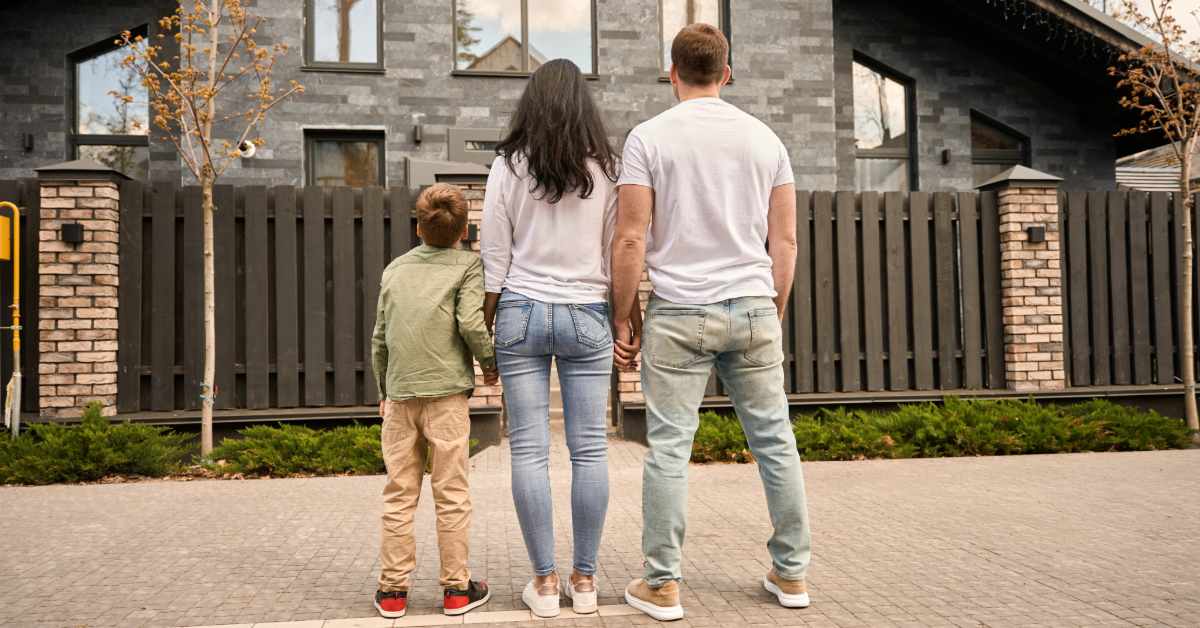
A young Danish family left Copenhagen behind to create a new life in an intentional rural community called Sjællandsk Muld. Their move reflects a growing trend among Danes seeking shared living spaces that combine independence with sustainability and togetherness.
Leaving the City for a New Kind of Life
When Jesper and Sara Hjorth were expecting their first child, they realized that urban life no longer fit the future they wanted. The couple had lived in a collective apartment in Copenhagen’s Østerbro neighborhood but longed for more open space, nature, and local connection. Their decision took them far from traffic and noise to a shared property in Hvalsø known as Sjællandsk Muld.
Today the family, soon to be four, lives among neighbors who share meals, tools, and community work. Their experience captures how some Danes are rethinking what it means to live in Denmark. Many still appreciate the city lifestyle, but more are seeking human-scale alternatives that combine private homes with shared responsibility.

Growing Interest in Shared Housing
Since the 1970s, the number of co-housing projects in Denmark has steadily increased. According to Aalborg University’s research, there are now more than 400 such communities across the country. These include intergenerational setups, senior groups, and eco-villages. A few even take inspiration from the communal “kollektiv” model of the 1970s.
Municipalities such as Furesø, Hillerød, and Roskilde have encouraged these developments, seeing them as part of local sustainability and urban planning goals. Yet building one is not easy. The Hjorths joined Sjællandsk Muld after years of preparation. It took nearly seven years from concept to move-in day due to challenges involving planning, financing, and construction.
Help from Almenr
To make Sjællandsk Muld a reality, the families involved partnered with a company called Almenr. The firm helps citizens organize, finance, and build communal housing projects. Its founders wanted to make it easier for ordinary Danes to form meaningful neighborhoods without relying on traditional developers focused on profit.
Almenr has been involved in several projects, including Krake and Fridlev, also located in the Lejre region. Today the company supports multiple communities across Greater Copenhagen, Jutland, and a pair of “leisure villages” with summer houses. Its goal is to revive a modern version of Denmark’s old cooperative building culture, where neighbors worked together to design and build entire villages.

Bringing Cooperation Back
Historically, Danes often worked collectively on local construction projects. People shared labor, used nearby craftsmen, and funded projects through community banks or cooperative savings institutions. Almenr’s founders aim to restore that spirit through practical systems and models that ordinary groups can follow. They see housing not as an investment product but as a foundation for a meaningful life.
Each Almenr collaboration starts with shared vision sessions, agreement on design principles, and guidance on financing and regulation. They help organize meetings between architects, banks, and municipalities, ensuring new residents can shape both their homes and their community’s values.
Who Chooses This Lifestyle
According to Almenr’s numbers, more than 25,000 people have signed up to explore living in some form of co-housing or village network. These range from retirees and single women to young families and parents whose children have already moved out.
Experts from Videncentret Bolius note that the concept fits an enduring Danish tendency to thrive in close community settings. Many younger Danes want to combine personal space with social connection, often emphasizing sustainability, organic food gardens, or renewable energy systems. That attitude is changing how future homes and neighborhoods are planned throughout Denmark.

A Cultural Shift Beyond Housing
As families like the Hjorths show, choosing to live collectively is rarely just about cheaper housing or green ideals. It often reflects a deeper wish for belonging and balance between independence and interdependence. In that sense, Denmark’s co-housing movement mirrors broader debates about urbanization, loneliness, and modern lifestyles.
The Hjorth family’s shift from a shared flat in the city to shared land in the countryside captures an alternative version of the Danish dream—one built not on ownership or isolation but on partnership and purpose.
Sources and References
The Danish Dream: What is it like to live in Denmark as told by a Dane
The Danish Dream: Buying Property in Denmark for Foreigners
TV2: Familien sagde farvel til livet i byen – nu lever de på utraditionel vis