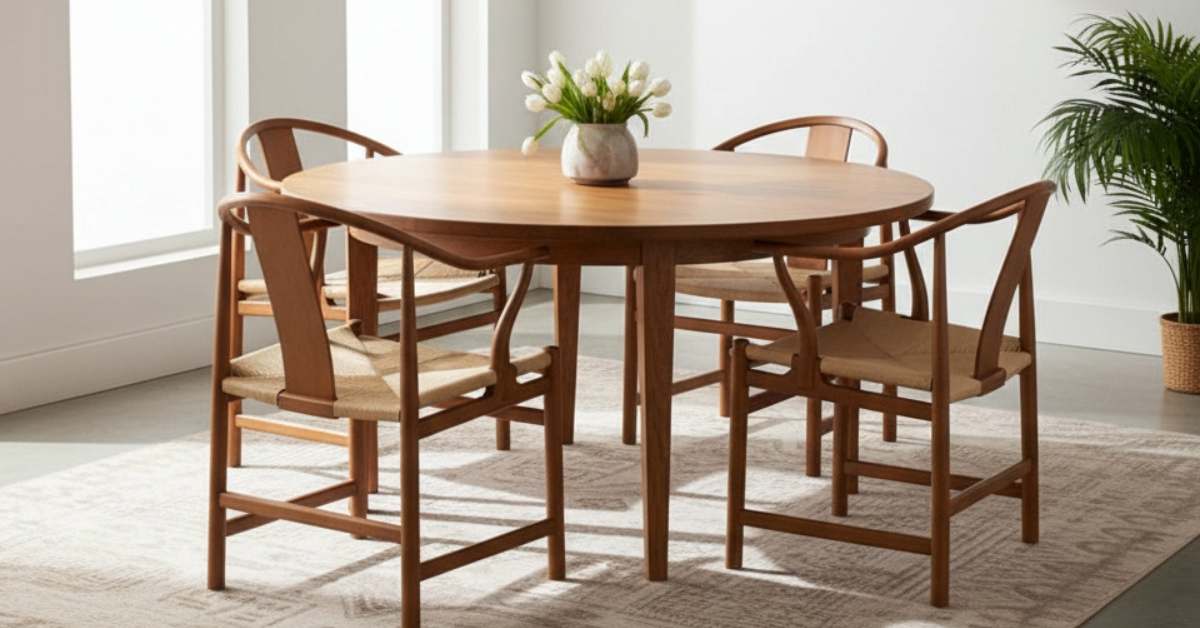
Few chairs illustrate the meeting of cultures as gracefully as Hans J. Wegner’s Chinese Chair. Drawing on traditional Chinese forms and Scandinavian craftsmanship, this article explores the design’s origins, philosophy, and enduring role in Danish modern furniture history.
Key Points
- A Masterpiece of Danish Design: The Chinese Chair by Hans J. Wegner embodies Danish design principles, combining Asian aesthetics with Scandinavian craftsmanship, highlighting simplicity, functionality, and sculptural beauty.
- Hans J. Wegner: The Visionary Behind the Design: Wegner, a pioneer of Danish Modern, drew inspiration from Chinese furniture, creating designs that emphasize comfort, durability, and elegant simplicity, with the Chinese Chair being a key milestone.
- Design Philosophy and Ergonomic Elegance: The Chinese Chair reflects Wegner’s belief that a chair should be beautiful from all angles and comfortable, seamlessly blending form and function with minimalistic yet ergonomic design.
- Materials and Craftsmanship: Made from solid wood like oak or walnut and featuring hand-woven seat materials, the Chinese Chair showcases Danish craftsmanship with meticulous joinery, sturdy construction, and high-quality natural materials.
- Iconic Status and Cultural Impact: As a groundbreaking reinterpretation of Asian design principles, the Chinese Chair elevated Danish furniture design globally and remains a symbol of timeless elegance and cultural synthesis.
A Masterpiece of Danish Design
Few pieces of furniture encapsulate the essence of Danish Design quite like the legendary Chinese Chair by the renowned Danish designer, Hans J. Wegner. Designed in 1944, the Chinese Chair stands as a testament to Wegner’s lifelong pursuit of simplicity, functionality, and sculptural beauty. A cornerstone in the history of Danish furniture, this chair represents the fusion of traditional Asian aesthetics with modern Scandinavian craftsmanship—an unconventional harmony achieved with extraordinary finesse.
At first glance, the Chinese Chair exudes elegance through its curved wooden backrest and seamless construction. Its form is strikingly minimalist, yet it possesses a structural depth that transcends mere visual appeal. The chair’s gentle, organic lines and ergonomic qualities serve both aesthetic and practical purposes. With over **500 chair designs** attributed to Wegner, the Chinese Chair holds a special place as the first piece that launched his exploration of the classic Chinese Ming Dynasty chair designs. This exploration would later culminate in his world-famous “Wishbone Chair,” but it all began with the humble brilliance of the Chinese Chair.
Hans J. Wegner: The Visionary Behind the Design
Hans J. Wegner, born in 1914 in Tønder, Denmark, is widely considered one of the most influential pioneers of 20th-century Danish furniture design. Trained as a cabinetmaker before studying at the Danish School of Arts and Crafts, Wegner brought a deep understanding of woodcraft to all of his furniture designs. His strong belief was that furniture should be comfortable, long-lasting, and beautiful from all angles.
Wegner was a key contributor to what is now globally recognized as “Danish Modern” design—a movement that blended minimalist aesthetics with fine craftsmanship and functionalism. His works, including the Chinese Chair, are often characterized by their sculptural qualities and intuitive ergonomics. When tasked with creating a chair that would emphasize design rooted in tradition but oriented toward modern living, Wegner turned to the classic forms of ancient Chinese furniture, specifically the horseshoe-back armchair that was widely used during the Ming Dynasty.
He distilled centuries of design tradition into a fresh, light, and simplified silhouette that could be mass-produced without losing its elegance or soul. The result was the Chinese Chair, a significant milestone in the evolution of Scandinavian furniture and still one of Wegner’s most admired pieces.
The Design Philosophy and Vision
The Chinese Chair is not simply a homage to Asian aesthetics; it is a manifestation of Wegner’s conviction that “a chair is to have no backside. It should be beautiful from all angles.” Everything about the chair speaks to this principle—from the graceful arching of the backrest to the subtly tapered legs and delicate joinery. Wegner’s goal was to create a chair that conveyed the essence of timeless design, seamlessly integrating form and function.
Central to his vision was the idea that furniture should enhance people’s lives without demanding attention. The Chinese Chair accomplishes this with a refined presence that fits effortlessly into both traditional and contemporary interiors. Whether placed at a dining table, in a hall, or as a standalone statement piece, it offers an experience that is both visual and tactile.
Materials and Craftsmanship
The Chinese Chair exemplifies the high standards of Danish craftsmanship. Traditionally crafted from **solid wood**—most commonly oak, walnut, or cherry—the chair features elegant mortise-and-tenon joints that emphasize natural textures over visible fasteners. The curved backrest is steam-bent and sanded to a satin-smooth finish, demonstrating meticulous skill and attention to detail.
Typically, the seat is made of **hand-woven paper cord or leather**, both designed to offer long-term durability and comfort. The choice of materials is not simply aesthetic but deeply connected to the core values of Danish Design—durability, sustainability, and a reverence for the character of natural materials.
Even after nearly **80 years** since it was first released, the Chinese Chair remains in production today, a testament to its enduring relevance and the quality of its construction. Each piece carries the spirit of modernism rooted in heritage, showcasing Danish craftsmanship at its finest.
Why the Chinese Chair is Considered Iconic
The Chinese Chair by Hans J. Wegner is significant not only for its individual design merits but also for its placement in the broader narrative of modern furniture. It marked the first time a Western designer had so thoroughly and respectfully reinterpreted Asian design principles for a modern audience. This pioneering act won the chair immediate acclaim in design circles.
Additionally, the piece helped to elevate Denmark’s reputation as a global leader in furniture design during the mid-20th century. Alongside other works by Wegner and his contemporaries such as Arne Jacobsen and Børge Mogensen, the Chinese Chair helped to shape the Danish Modern movement and secure Denmark’s place on the world stage of design excellence.
Its continued presence in design exhibitions, auction houses, design museums (such as the Designmuseum Danmark in Copenhagen), and high-end interiors around the world underscores its status as not just a piece of furniture, but a functional work of art.
In essence, the Chinese Chair beautifully encapsulates what Danish Design is all about: clean lines, honest materials, and timeless elegance formed by expert workmanship. Its subtle artistry commands quiet reverence—a quality that only true masterpieces can achieve.
A Touchstone of Danish Design Culture
Owning the Chinese Chair is not merely an aesthetic decision—it’s an immersion into the legacy of Danish design and an embodiment of Denmark’s deeply rooted interior design culture. The Danish approach to living spaces is defined by a focus on simplicity, light, and functionality. Furniture is not simply functional but is an integral part of creating cozy, harmonious environments—what Danes lovingly refer to as “hygge.” The Chinese Chair fits seamlessly into this philosophy, offering a timeless, light, and elegant silhouette that enhances spatial harmony.
In Denmark, living rooms and dining areas are often characterized by an open, airy layout with a warm, tactile material palette. The Chinese Chair’s refined wooden form and graceful proportions fit effortlessly into such environments, acting as both a useful seat and a sculptural centerpiece. With its minimalistic presence and soft curvature, it doesn’t dominate a room—it elevates it quietly.
Timeless Elegance with Ergonomic Intelligence
What sets the Chinese Chair apart from countless other design pieces is its rare union of timeless beauty and ergonomic comfort. Unlike many design chairs that prioritize form over utility, Hans J. Wegner ensured that every line in the chair contributes to its physical ease. The semi-circular backrest supports natural posture, while the height, depth, and seat construction encourage relaxation during extended use. For this reason, the chair is often found in dining rooms, lobbies, and even workspaces, where both comfort and design are valued.
Adding this chair to your home is not simply a matter of taste—it’s investing in a piece of furniture that’s built to last. Many Chinese Chairs are passed down through generations, making it a future heirloom. With proper care, the durable wood joints and quality materials can last over **50 years**, often gaining patina and character with time.
Eco-conscious Craftsmanship
Modern Danish design also incorporates a strong emphasis on sustainability and respect for craftsmanship. This makes the Chinese Chair a smart choice for those seeking furniture that’s ethically produced and environmentally friendly. Most contemporary production models are made using responsibly sourced timber, and many are manufactured in Denmark or other parts of Scandinavia under stringent environmental standards.
When you purchase a Chinese Chair, you’re supporting sustainable craftsmanship that values long life cycles and responsible forestry. This is increasingly important in a world of disposable and mass-produced furniture, where price often comes at the expense of quality and ecological impact.
Moreover, the fact that Wegner’s original design from over **75 years ago** continues to be relevant and in production ensures that you’re investing in a product that defies trends and resists obsolescence—a rare virtue in today’s ever-changing design landscape.
A Cherished Investment
Whether you’re redecorating a home or acquiring a single statement piece, the Chinese Chair blends effortlessly with modern interiors while offering a respectful nod to global and historical influences. Its refined silhouette and subtle expressions of Danish design language make it suitable for nearly any space—from an elegant dining room to a minimalist hotel lobby.
Unlike trend-based pieces that may lose appeal in a few years, the Chinese Chair’s enduring story and unmatched craftsmanship ensure it will only become more cherished over time. It is an eloquent balance of history, art, and purpose—created not just to be seen, but to be lived in.
Conclusion
The Legendary Chinese Chair by Hans J. Wegner is a work of art encapsulating the principles of Danish design: elegance, simplicity, and functionality. More than just a piece of furniture, it represents a cultural intersection between traditional Chinese artistry and modern Scandinavian craftsmanship. Wegner’s innovation elevated this chair to a timeless design icon, blending the beauty of organic materials with an understanding of ergonomic needs. As a result, the Chinese Chair remains a relevant and revered piece in the world of interior design, continuing to enhance and enrich the spaces in which it resides.
Summary
– Hans J. Wegner designed the Chinese Chair in 1944, drawing inspiration from traditional Chinese Ming Dynasty chairs, thus pioneering a blend of Asian and Scandinavian design elements.
– This chair embodies the essence of Danish Design, marked by its seamless construction, ergonomic comfort, and minimalist elegance.
– Materials commonly used in its production include high-quality woods such as oak and walnut, along with woven paper cord or leather for the seat.
– Buying an authentic Chinese Chair involves selecting reputable retailers such as Carl Hansen & Søn and PP Møbler, ensuring acquisition of a piece crafted to last.
– The Chinese Chair offers an investment in Danish craftsmanship, sustainability, and timeless design, making it a worthwhile addition to any space.
FAQ
1. What makes the Chinese Chair by Hans J. Wegner so special?
The Chinese Chair is special due to its unique design that merges Eastern aesthetics with Western modernism. It exemplifies Danish craftsmanship and offers timeless elegance and comfort, making it a cherished piece for both collectors and design enthusiasts.
2. Where can I find authentic Hans J. Wegner Chinese Chairs?
Authentic Chinese Chairs can be found through reputable retailers such as Carl Hansen & Søn, PP Møbler, Danish Design Store, and Scandinavian Design Center. These sellers offer certified reproductions and have a high regard for craftsmanship and quality.
3. How can I recognize an authentic Hans J. Wegner Chinese Chair?
Authentic chairs come with labels or engravings from the manufacturer. The build quality, material integrity, and precision in design are additional indicators. Authentic chairs often come with a certificate of authenticity.
4. What materials are used in the construction of the Chinese Chair?
The chair is traditionally made from solid woods such as oak, walnut, or cherry, with a seat typically crafted from hand-woven paper cord or leather, emphasizing durability and comfort.
5. Is the Chinese Chair comfortable for everyday use?
Yes, the chair is renowned for its ergonomic design, providing excellent back support and comfort for prolonged sitting periods, making it ideal for dining spaces or quiet corners in living rooms.
6. How do I care for and maintain my Chinese Chair?
Regularly dust and wipe it with a damp cloth, and periodically clean the seat material using appropriate cleaners. Avoid placing it in direct sunlight or areas of excessive humidity to preserve its finish and material integrity.
7. How does the Chinese Chair contribute to sustainable design?
The Chinese Chair’s production emphasizes sustainable practices, with responsibly sourced wood and longevity-focused craftsmanship. This reduces waste and encourages eco-conscious purchasing.
8. Can the Chinese Chair complement various interior design styles?
Absolutely. Its minimalist aesthetic and natural materials allow it to fit seamlessly into a variety of settings, from traditional to contemporary interiors.
9. Why is the Chinese Chair considered an investment piece?
Owing to its historical significance, enduring design, and high-quality craftsmanship, the chair typically retains its value and can be passed down as a family heirloom, often appreciating in worth over time.
10. Does the Chinese Chair feature in museums?
Yes, the Chinese Chair is part of several design collections globally, including at the Designmuseum Danmark, which underscores its importance in the history of furniture design.