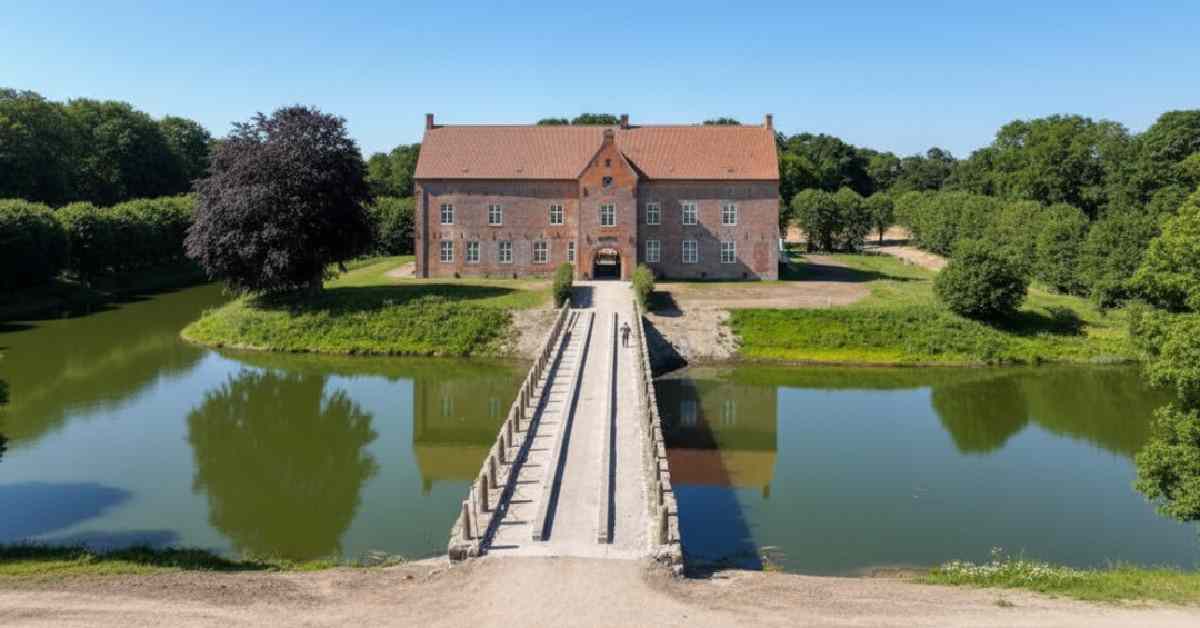
This storied estate, also known as Sæbygaard Slot, captures centuries of history, serving as a gateway to understanding Denmark’s noble past and its evolution over time. With its breathtaking architecture, large gardens, and compelling narratives, Saebygaard Manor holds an esteemed status in Denmark’s patrimonial landscape. Thus, attracting historians, architects, and tourists alike.
I am one of those historians who graced the place recently. And I gained a lot of knowledge from the short tour. Note that an alternative famous Danish manor to visit is Bratskov Manor.
Historical Significance of Saebygaard Manor and More
Built in the early 17th century, Sæbygaard Manor is a testament to the European Renaissance’s reach into Denmark. Therefore, showcasing the transition from medieval strongholds to more refined and domesticated manor houses.
The manor’s construction, believed to have commenced in 1570 and completed in 1620, aligns with Denmark’s Renaissance architectural movement. It was characterized by its symmetric layouts and ornamental façades. Additionally, it was originally commissioned by the prominent Danish nobleman Niels Juel, who is best remembered for his influential role as Admiral in the Royal Danish Navy. Juel envisioned Sæbygaard as both a stately home and a bastion of regional power, a vision that was meticulously realized in its design and execution.
Sæbygaard Manor’s historical significance is further amplified by its continuous existence through Denmark’s turbulent past. This is from the wars with Sweden to the agricultural reforms of the 18th and 19th centuries. As noble families and later enterprising owners carried the estate through various epochs, it witnessed a variety of important societal and cultural chapters unfolding on its grounds.
Architectural Marvel and Aesthetic Charm
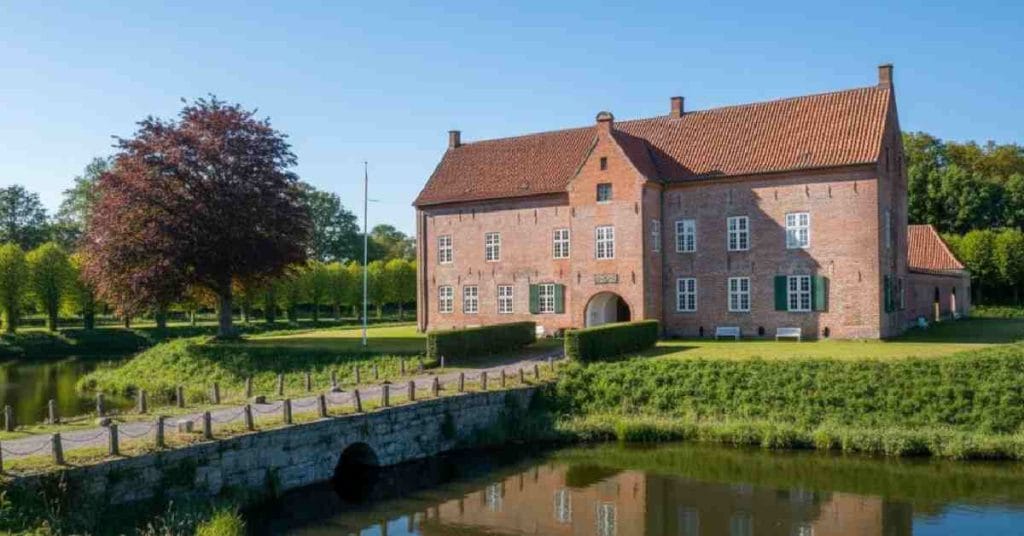
Sæbygaard Manor is an architectural gem, predominantly in the Renaissance style with hints of later Baroque and neoclassical influence. The manor’s structural design is a manifestation of symmetry and balance, hallmarks of Renaissance architecture. It boasts a three-winged layout crafted from traditional Danish red brick with white limestone ornamentation.
One key feature of the manor is its elegant Great Hall, adorned with period-specific artwork and furnishing. Hence, transporting visitors back to the era of grand banquets and noble gatherings. Also, the complex woodwork, paneling, and tapestries evoke the grandeur of 17th-century Danish nobility.
The manor extends its beauty into vast, meticulously kept gardens that stretch over several acres. It features geometric hedgerows, water features, and a collection of indigenous and non-indigenous plants. The gardens not only reflect the aesthetic values of their time but remain a living canvas evolving through each season. Thereby, attracting botanical enthusiasts and casual admirers alike.
Planning Your Visit to Saebygaard Manor
When to Visit
The best time to explore Sæbygaard Manor and its grounds is during the warmer months, from May to September. This is when the estate’s gardens are in full bloom, showcasing their vibrant flora. During this period, the manor is generally open to the public from Tuesday to Sunday, between 10 am and 4 pm. However, it is always advisable to verify the latest opening hours and any scheduled events on their official website or through local tourist information centers. This is as specific schedule changes or special events may affect general access.
For those interested in Denmark’s seasonal festivities, visiting during midsummer or the harvest festivals can enhance the cultural experience. This is with seasonal displays and local culinary offerings available on-site. The manor occasionally extends its hours to accommodate evening events such as concerts or special exhibitions during these festivals. Thus, providing a unique opportunity to see the grounds illuminated at dusk or enjoy performances in the Garden Hall.
Getting to Saebygaard Manor
Sæbygaard Manor is conveniently located approximately 50 kilometers from Aalborg, Denmark’s fourth-largest city. Consequently, making it easily accessible for both domestic and international travelers. Driving is perhaps the most straightforward option. Visitors can reach the manor via the E45 highway by taking Exit 16 towards Sæby. This is followed by a scenic 20-minute drive through the charming countryside.
For those relying on public transportation, bus services are available from Aalborg to Sæby. This is with the manor being a short taxi ride from Sæby’s central bus station. Additionally, bicycle paths are well-marked for visitors choosing to enjoy the fresh Danish air on a cycling tour. It is a preferred method during the sunny Danish summers among both locals and tourists.
Conclusion
From its meticulously preserved Renaissance architecture and lush botanical gardens to its role as a cultural touchstone through various historical periods, the manor offers an immersive window into the past. Whether you are an avid historian, an architecture enthusiast, or a curious traveler, visiting Sæbygaard Manor promises a delightful and edifying journey.
Frequently Asked Questions about Saebygaard Manor
1. What is the best time of year to visit Sæbygaard Manor?
The ideal time to visit is during the warmer months, from May to September. This is when the gardens are vibrant and the weather is pleasant for exploring both the interior and the manor grounds.
2. How can I reach Sæbygaard Manor from Aalborg?
The manor is a 50-kilometer drive from Aalborg, accessible via the E45 highway followed by a scenic road towards Sæby. Bus services are available from Aalborg to Sæby, with taxis completing the journey to the manor.
3. Are guided tours available at Sæbygaard Manor?
Yes, guided tours are available in both Danish and English. These tours enhance the experience by providing historical context and uncovering fascinating details about the manor’s architecture and its former inhabitants.
4. Can I visit the gardens without entering the main building?
Visitors have the freedom to explore the gardens and grounds without touring the main building. The gardens offer a nice and peaceful setting for those who enjoy outdoor beauty.
5. Are there any special events or festivals held at the manor?
Sæbygaard Manor hosts various events and festivals throughout the year, particularly during midsummer and harvest time. These events often feature extended hours, music performances, and cultural displays.
6. What can I expect from the art and architecture within the manor?
Inside the manor, visitors can admire period-specific artwork, detailed woodwork, and tapestries that provide insight into the aesthetic and cultural values of the time.