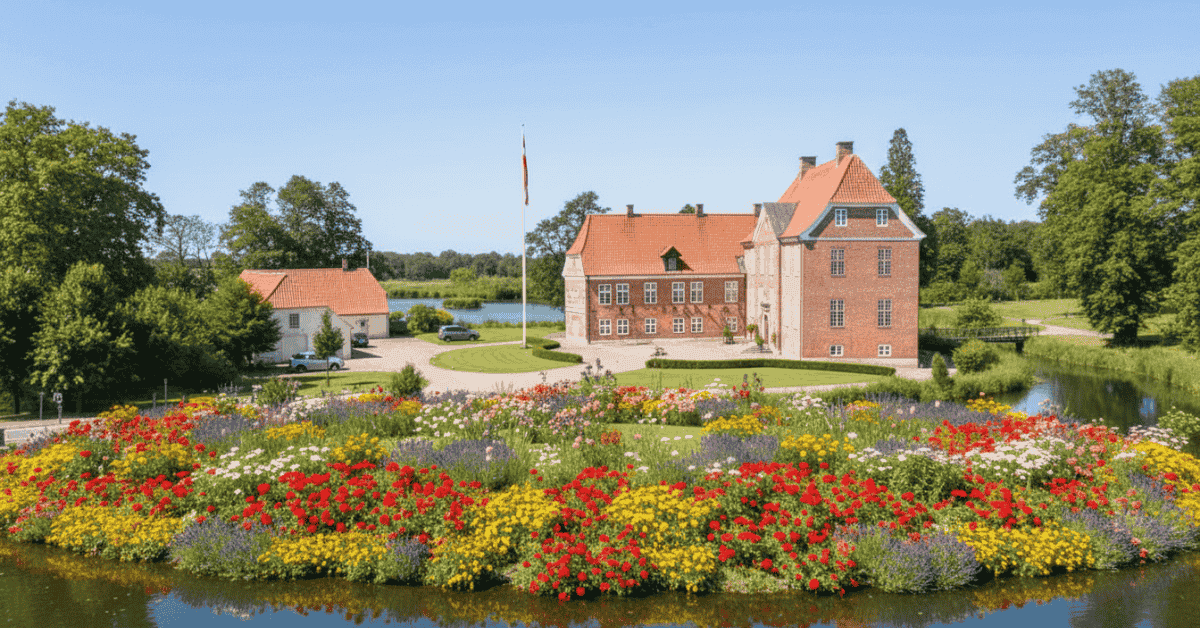
Nestled amidst the serene landscapes of southern Jutland, Gram Castle (Gram Slot) stands as a testament to Denmark’s rich historical tapestry. With its majestic architecture and storied past, Gram Castle not only offers a glimpse into the lives of its bygone inhabitants but also serves as an emblem of Denmark’s noble and cultural heritage. This grand edifice has gracefully stood the test of time, capturing the imagination of historians, tourists, and locals alike.
- Historical Roots of Gram Castle: Founded in 1232, the castle offers insights into Denmark’s medieval aristocracy and cultural heritage, having served as a regional power center.
- Architectural and Cultural Significance: Gram Castle displays a blend of architectural styles from various periods, with ornate interiors, gardens, and extensive parklands emphasizing its historical evolution.
- Modern Cultural Role of the Castle: Today, the castle hosts events like Christmas markets and sustainable initiatives such as an organic farm, keeping its cultural legacy alive.
- Visitor Experience and Practical Tips: Visitors can enjoy guided tours, seasonal events, and organic farm produce; booking in advance and dressing for weather are recommended.
- Timeless Charms and Heritage Preservation: Gram Castle remains an emblem of Danish history and culture, blending preservation with modern adaptations for a rich visitor experience.
The Significance of Gram Castle in Danish Heritage
Gram Castle has managed to enthrall visitors and scholars through its multifaceted appeal, a fusion of historical intrigue, architectural grandeur, and lush surroundings. Its importance surfaces not just in the physical splendor of its structure but in the layers of history embedded within its walls. The castle dates back to the early medieval period, with the first recorded mention in 1232, making it nearly 800 years old. Its enduring presence enriches Denmark’s historical narrative, providing insights into the medieval aristocracy that once dwelled in these grand halls.
The castle is renowned not only for its ancient origins but also as a dynamic part of the region’s cultural legacy. It’s surrounded by approximately 700 hectares of pristine forest and parkland, which renders it one of Denmark’s significant landed estates. In its heyday, Gram Castle was a focal point of regional governance and power, serving both as a residence and a symbol of noble dominance.
Throughout the centuries, it functioned as a seat of governance, changing hands among some of Denmark’s most influential nobility. Gram Castle underwent numerous reconstructions and restorations, each echoing the architectural transitions through periods, from Medieval to Renaissance to the Romantic eras, thus providing a living chronicle of the country’s evolving architectural styles.
Cultural and Architectural Marvels
Walking through Gram Castle is akin to embarking on a journey through time. This veritable architectural museum showcases a multitude of styles, reflecting the various historical phases it has weathered. The castle’s vibrant red brick facade, with intricate detailing and fortified walls, brings forth an imposing yet captivating presence. Its Baroque-style garden, adorned with manicured lawns and intricate sculptures, is a serene retreat, offering visitors a taste of 17th-century aristocratic leisure.
The interiors of Gram Castle provide an equally fascinating exploration. The lavish reception halls adorned with art from various eras and the intricate woodwork of the grand ballroom illuminate the aesthetic sensibilities of past centuries. Visitors can wander through the stately dining rooms where opulent feasts were once held, and the cozy libraries where generations of noble families studied. The castle’s chapel, with its serene ambiance and historical artifacts, further adds depth to the spiritual dimension of the estate’s history.
The Role of Gram Castle Today
In contemporary times, Gram Castle has transitioned from a symbol of nobility to a thriving cultural hub. It remains a vital part of Denmark’s cultural landscape, hosting numerous events, concerts, and festivals throughout the year. One of the most notable is the renowned Gram Slot Christmas market, which draws thousands of visitors annually. This event transforms the castle grounds into a winter wonderland, complete with stalls offering artisanal crafts, traditional Danish delicacies, and festive entertainment, thus keeping the castle pulsating with life.
Moreover, Gram Castle has embraced sustainability and local food culture by transforming part of its vast estate into an organic farm. The castle’s estate farm produces a variety of organic products, which play a crucial role not just in promoting sustainable agricultural practices but also in fostering community engagement. Visitors can enjoy fresh, locally-sourced meals at the castle restaurant, allowing them an authentic taste of the region’s culinary heritage.
In preserving the castle, care is taken not only to maintain its historical integrity but also to enhance its economic viability in today’s modern world. As a result, the estate serves as a unique model of adaptive reuse, showing how historical sites can remain economically relevant while preserving their cultural heritage.
Gram Castle is more than just a historical site; it is an evolving narrative of continuity and change, of preservation and progression. This perennial allure, coupled with its rich history, stunning architecture, and modern-day relevance, makes Gram Castle an indispensable jewel in Denmark’s cultural crown, drawing visitors from near and far to immerse themselves in its timeless charm.
Planning Your Visit to Gram Castle: A Practical Guide
Visiting Gram Castle is not just a journey through history but also a captivating experience set amidst Denmark’s enchanting landscapes. Whether you’re a history buff, architecture aficionado, or simply seeking a serene getaway, Gram Castle offers something unique for every traveler. Here is a definitive guide on how and when to visit this remarkable site, ensuring you have a memorable experience.
When to Visit
Gram Castle is open to visitors year-round, each season offering its own unique allure. The spring and summer months, from April to September, are particularly vibrant, with the castle’s gardens in full bloom, creating a picturesque backdrop against the historic architecture. During these months, daily temperatures in southern Jutland typically range from 10°C to 25°C (50°F to 77°F), providing comfortable conditions for outdoor exploration.
Autumn brings a rich tapestry of colors to the castle grounds, while winter cloaks it in a serene ambiance. The winter months, especially December, are ideal for those wanting to experience the enchanting Gram Slot Christmas market. It’s important to verify the specific opening hours and any event occurrences on the castle’s official website, as these can vary seasonally.
Getting There
Reaching Gram Castle is an easy undertaking, whether you are traveling from within Denmark or internationally. It is located in the town of Gram, about 45 kilometers (approximately 28 miles) from the nearest major city of Kolding. For those flying into Denmark, the nearest airport is Billund, located about 70 kilometers (43 miles) from the castle. From the airport, you can hire a car or use public transport options like buses or trains that connect to the town of Gram.
If opting for public transport, the Danish railway network is efficient and well-connected. Trains to nearby stations such as Ribe or Vojens provide an opportunity to explore the charming landscapes of southern Jutland, after which local bus services can take you directly to Gram.
Exploring the Castle Grounds
Upon arrival, be prepared to be whisked away by the grandeur of Gram Castle and its extensive grounds. Begin your tour by exploring the meticulously maintained gardens. A guided tour of the castle interiors is highly recommended, as it offers insightful narratives about the history and architecture from knowledgeable guides. It’s worth noting that the tours are usually conducted in Danish, but English-speaking guides or informational materials are typically available.
As Gram Castle is part of a working organic farm, make time to visit the farm shop. Here, you can purchase local organic produce, providing an authentic taste of Danish agrarian culture. The castle’s farm and estate span approximately 700 hectares, so comfortable walking shoes are a must for those wishing to explore extensively.
Accommodation Options
For those wishing to extend their stay, Gram Castle offers unique accommodation options. Guests can opt for quaint rooms within the castle itself, allowing one to truly immerse in the historic ambiance. Alternatively, there are charming bed and breakfast options in nearby towns and rural accommodations dotting the picturesque countryside.
Staying onsite not only enhances the cultural experience but also provides convenient access to the estate’s activities, such as guided nature walks, horse carriage rides, and seasonal events.
Visitor Tips
– **Early Booking**: Given the castle’s popularity, especially during seasonal events and weekends, it’s wise to book tours and accommodations well in advance.
– **Event Schedules**: Check the calendar for special events or workshops—these can enrich your visit with unique cultural experiences, such as cooking classes using local produce or art workshops.
– **Pack Smart**: Danish weather can be unpredictable, so packing layers is advisable. Additionally, an umbrella and lightweight raincoat can be handy regardless of your travel season.
– **Photography**: Gram Castle presents excellent photo opportunities due to its architectural splendor and scenic settings. While photography is generally allowed, always respect any restricted areas and local guidelines.
Exploring Gram Castle is akin to peeling back layers of time; each visit unearths something new and remarkable. Whether walking through its historical interiors or savoring the organic delights of its farm, a visit to Gram Castle promises a unique blend of history, culture, and natural beauty that leaves visitors enchanted and inspired.
Conclusion: Embracing the Timeless Allure of Gram Castle
As the curtains draw on an exploration of Gram Castle, the enduring allure of this historical gem becomes profoundly evident. Gram Castle is much more than a collection of bricks and mortar; it is a vibrant tapestry interwoven with layers of history, architecture, and culture. From its medieval origins to its dynamic modern-day role, the castle invites visitors to step back in time while simultaneously offering contemporary experiences nestled within its sprawling estate.
Visiting Gram Castle is a journey through Denmark’s noble past, a chance to explore lush landscapes, and an opportunity to engage with local traditions and sustainable practices. Whether you wander through its historic halls, stroll its vast gardens, or partake in its cultural events, Gram Castle remains a quintessential destination for anyone seeking a rich and fulfilling exploration of Danish heritage.
Summary
– **Historic Significance**: With roots tracing back to 1232, Gram Castle is a layer of Denmark’s noble history, showcasing various architectural styles and cultural transitions.
– **Architectural Marvel**: The castle’s red brick facade, Baroque gardens, and lavish interiors reflect centuries of Denmark’s architectural evolution.
– **Cultural Hub**: Today, the castle hosts numerous events, including the popular Gram Slot Christmas market, and supports sustainable practices with an operational organic farm.
– **Visitor Experience**: Open year-round, Gram Castle offers tours, farm produce, accommodations, and a serene landscape, enhancing visitors’ understanding of Danish culture.
Frequently Asked Questions (FAQ)
What is the historical significance of Gram Castle in Denmark?
Gram Castle dates back to 1232 and provides a rich insight into Denmark’s medieval aristocracy, serving as a symbol of noble and cultural heritage.
How has Gram Castle contributed to Denmark’s cultural legacy?
The castle has been a regional governance center, showcasing architectural transitions from Medieval to Renaissance and Romantic eras, and is surrounded by extensive parklands, emphasizing its importance in Danish history.
What architectural styles are evident in Gram Castle?
Gram Castle features a red brick facade, Baroque gardens, and interiors with art, woodwork, and historical artifacts reflecting various architectural periods.
What activities and events can visitors enjoy at Gram Castle today?
Visitors can enjoy guided tours, participate in seasonal events like the Christmas market, explore the organic farm, and experience various cultural and outdoor activities.
What are the practical tips for planning a visit to Gram Castle?
It is advisable to book tours and accommodations in advance, check event schedules, pack layers for weather variability, and respect photography guidelines to ensure an enjoyable visit.