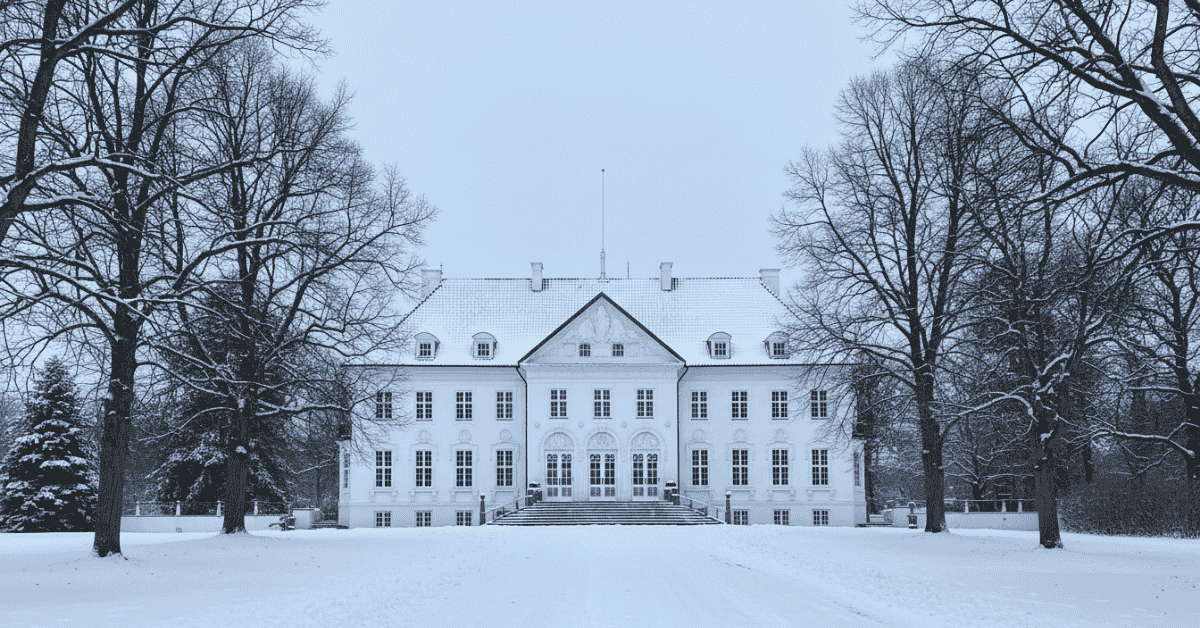
Set on the southern edge of Aarhus, Marselisborg Palace (in Danish: Marselisborg Slot) is one of Denmark’s best-loved royal residences. The palace itself is a private home, but its English-style park, rose garden and sculptures are open to everyone whenever the royal family is away – and when the King is in residence, the daily changing of the guard is free to watch.
Updated November 2026.
- Historical Significance of Marselisborg Palace: Built between 1899 and 1902 to designs by Hack Kampmann, the palace was a wedding gift from the Danish people to Prince Christian (later Christian X) and Princess Alexandrine, paid for by a nationwide collection on land donated by the city of Aarhus.
- Public Access and Interior Visits: The interiors of Marselisborg Palace are not open to the public; the roughly 13-hectare park is open, free of charge, when the royal family is not in residence.
- Best Time to Visit: Late spring to early autumn, when the rose garden is in bloom – but check that the royal family is not in residence, as the park closes during and shortly around their stays.
- Getting There: The palace (Kongevejen 100, 8000 Aarhus C) lies about 3 km south of Aarhus city centre. Midttrafik city bus 17 serves the palace and Mindeparken, or you can walk or cycle along the coast.
- Tips for Visiting: Check the royal calendar before you go, dress for Danish weather, respect the grounds, and combine your visit with Mindeparken or Moesgaard Museum nearby.
Importance and Significance of Marselisborg Palace
Marselisborg Palace holds a special place in Danish architecture and in the relationship between the royal family and the public. After Prince Christian (later King Christian X) and Princess Alexandrine became engaged in 1897, a nationwide collection was organised to give the couple a summer palace in Jutland. The city of Aarhus, which had bought the old Marselisborg estate in 1896, offered part of the land free of charge, and the palace was built between 1899 and 1902. The fact that it was funded by ordinary Danes still shapes how locals see the place: it is a royal home, but also very much “their” palace.
The palace is surrounded by a park of about 13 hectares (around 32 acres), laid out in the English landscape style in the early 1900s by landscape gardener L. Chr. Diederichsen in cooperation with Queen Alexandrine. Expect wide lawns, old trees, small ponds and lakes, a rose garden and a herb garden. The park is open to the public whenever the royal family is not in residence, which makes Marselisborg an easy and free highlight of any visit to Aarhus.
Architectural Beauty
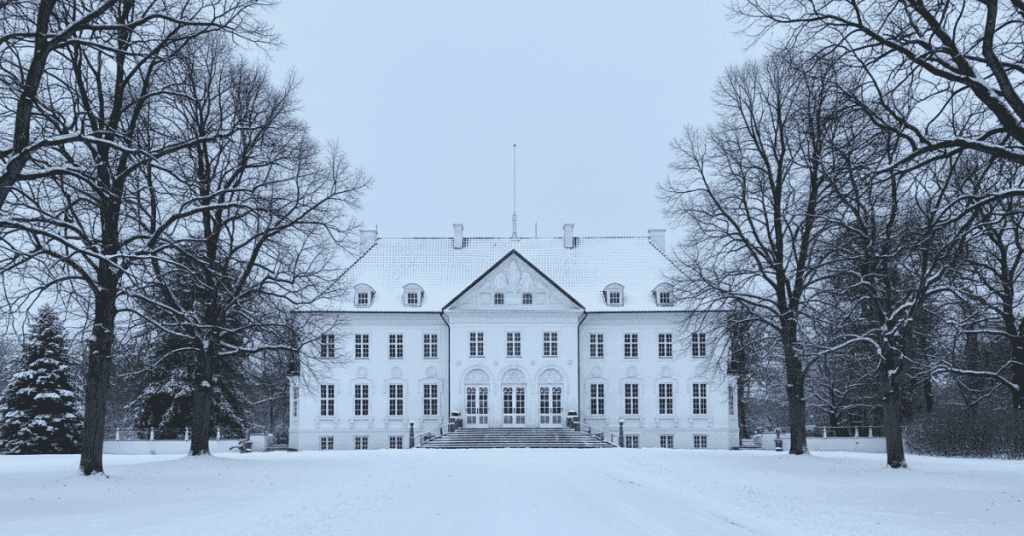
The palace was designed by Hack Kampmann, one of the leading Danish architects of his day and the state’s Royal Inspector of Listed Buildings – he also designed several of Aarhus’ landmark buildings. Marselisborg has the restrained, classical look favoured around 1900: a bright façade, symmetrical lines and a terrace and lawn that open towards Aarhus Bay. It is elegant rather than grand, which suits its role as a family summer home.

Art is a big part of the experience outdoors. The park contains several modern sculptures, including Miguel Berrocal’s Marcelisa on the lawn facing the bay, Peter Brandes’ 4.78-metre-tall Marselisborg Jar, Nicolas Lavarenne’s bronze ferryman Grand Passeur standing in one of the lakes, and a copper-roofed spire salvaged from Otto Mønsted’s former margarine factory in Copenhagen, which Queen Margrethe nicknamed “Villa Margarinely”.
The Royal Connection
Marselisborg Palace has been closely tied to the Danish monarchy for more than a century. In 1967, King Frederik IX made the palace available to Princess Margrethe and Prince Henrik, and it was modernised with money the couple received as a wedding gift from the Danish people. For more than five decades it was Queen Margrethe II’s summer residence, and the royal family also became known for spending Christmas there.
Since Queen Margrethe’s abdication in January 2024, Marselisborg has been used by King Frederik X and Queen Mary. The monarch traditionally uses it as a summer and Christmas residence, but exact dates change from year to year, so always check the royal calendar. The royal family’s summer arrival in Aarhus is still a local event, and the palace’s mix of private home and public park gives it a relaxed, approachable feel.
Cultural Events and State Affairs
Beyond its role as a private residence, Marselisborg is occasionally used for official royal engagements and visits. The best-known public spectacle is the changing of the guard: when the King is in residence, the Royal Life Guard changes guard at the palace every day at 12:00. It is free to watch and a nice glimpse of Danish ceremonial tradition outside Copenhagen.
Royal birthdays and other occasions have also seen the royal family greet crowds from the palace over the years, drawing locals and visitors to Kongevejen. For travellers and internationals living in Denmark, Marselisborg is an easy way to experience the royal side of Danish life without a ticket or a trip to the capital.
Visiting Marselisborg Palace: A Journey Through Danish Royalty
While the interiors of the palace are not open to the public, the park and gardens are free to explore all year round whenever the royal family is away. It is an easy half-day outing from central Aarhus, Denmark’s second-largest city, and pairs well with the neighbouring Mindeparken (Marselisborg Memorial Park) and the Marselisborg Forests.
When to Visit
The park is open to the public when the royal family is not in residence. According to the Royal House, it closes for up to four weekdays before the royal family arrives and for up to two days after they leave. VisitDenmark lists the garden’s opening hours as 8:00–21:00 from April to September and 9:00–16:00 from October to March, but check before you go, as hours and closures can change. Late spring and early summer, when the roses bloom, and early autumn are lovely times to visit. If you would rather see the changing of the guard, time your trip for a period when the King is in residence and be there at noon.
Aarhus is busiest in the summer months, so visiting early in the day or outside the peak season gives you a calmer experience. With around 13 hectares to wander, there is usually plenty of space for a quiet walk even on busy days.
How to Get There
Marselisborg Palace (Kongevejen 100, 8000 Aarhus C) is about 3 kilometres (2 miles) south of Aarhus city centre. By public transport, Midttrafik city bus 17 serves Marselisborg Slot and Mindeparken (it stops at Banegårdspladsen/Park Allé and Busgaden in the centre). Note that you cannot buy tickets on board Aarhus city buses – buy a ticket in the Rejsebillet app or Midttrafik’s webshop before boarding; a Day Ticket Aarhus cost 59 DKK in 2026. If you prefer a scenic route, you can walk or cycle south along the coast from the city centre via Tangkrogen in roughly 30–40 minutes on foot.
If you are driving, there is parking in the area around Marselisborg and Mindeparken – check the signs, as paid-parking rules apply in parts of Aarhus. Use Rejseplanen to plan the exact route from where you are staying.
Tips for Visiting Marselisborg Palace
To make the most of a visit to Marselisborg Palace, consider these tips:
Check the Royal Calendar: Before planning a visit, check whether the royal family is in residence on the Royal House’s website (kongehuset.dk). If they are at the palace – or about to arrive – the park will be closed, although you can then catch the noon changing of the guard instead.
Explore the Surrounding Area: Combine your visit with Mindeparken right next door, the beach at Tangkrogen, Moesgaard Museum further south (city bus 18), or the Aarhus Botanical Garden for a full day out.
Prepare for the Outdoors: Danish weather is famously unpredictable, so dress in layers and bring rain gear. Comfortable shoes are a good idea, as the park is best enjoyed on foot.
Respecting the Grounds: The park is part of a private royal residence. Take your litter with you, stay off planted beds, and follow any signs or instructions from staff and guards.
Conclusion: Embracing Danish Heritage
Marselisborg Palace is more than a royal residence: it is a palace paid for by the Danish people and a park they can still enjoy for free. Whether you come for the roses and sculptures or to watch the noon changing of the guard, it offers an easy and very Danish glimpse of the monarchy in everyday life.
Summary
- Built from 1899 to 1902 to designs by Hack Kampmann, Marselisborg Palace was a wedding gift from the Danish people to Prince Christian and Princess Alexandrine.
- The palace was Queen Margrethe II’s summer residence from 1967 and is now used by King Frederik X and Queen Mary.
- The roughly 13-hectare (32-acre) park is free to visit when the royal family is not in residence.
- The palace is about 3 kilometres (2 miles) south of Aarhus city centre and is served by city bus 17, or reached by a walk along the coast.
- When the King is in residence, the Royal Life Guard changes guard daily at 12:00.
FAQ about Marselisborg Palace
What is the historical significance of Marselisborg Palace?
Marselisborg Palace was built between 1899 and 1902 as a wedding gift from the Danish people to Prince Christian (later Christian X) and Princess Alexandrine. It was funded by a nationwide collection and built on land donated by the city of Aarhus.
Can the public visit the interiors of Marselisborg Palace?
No, the palace interiors are not open to the public. The park, rose garden and sculptures are free to visit when the royal family is not in residence.
When is the best time to visit Marselisborg Palace?
Late spring to early autumn is ideal for the gardens. The park is closed while the royal family is in residence and for a few days before and after, so check the royal calendar on kongehuset.dk first. To see the changing of the guard, visit at 12:00 on a day when the King is in residence.
How can I get to Marselisborg Palace?
Marselisborg Palace is at Kongevejen 100, about 3 kilometres south of Aarhus city centre. Take Midttrafik city bus 17, walk or cycle along the coast, or drive and park nearby.
What are some tips for visiting Marselisborg Palace?
Check whether the royal family is in residence, buy your bus ticket before boarding, dress for the weather, respect the grounds, and combine your visit with Mindeparken or Moesgaard Museum nearby.
Official sources
- The Danish Royal House – Marselisborg Palace
- VisitAarhus – The history of Marselisborg Palace
- VisitDenmark – Marselisborg Palace
- Midttrafik – Tourist attractions in Aarhus by bus and Letbanen