The Gefion Fountain is Copenhagen’s grandest monument, a bronze goddess driving four oxen to carve out the island of Zealand. Built in 1908 and gifted by the Carlsberg Foundation, it sits free to visit beside Kastellet on the harbourfront.
The first time I walked from Nyhavn up to the harbour, I expected the Little Mermaid to steal the show. Instead, the Gefion Fountain stopped me cold. It is loud, muscular, and dramatic, the opposite of that small, demure mermaid on her rock. Sculpted by Anders Bundgaard and finished in 1908, the fountain stages a Norse creation myth in bronze and granite.
After years living here, I still send first-time visitors straight to it. Most tourists rush past on their way to the mermaid. They are missing the better statue. Here is what you need to know before you go.
Key Facts About the Gefion Fountain
- What it is: A monumental bronze fountain showing the goddess Gefion plowing the island of Zealand from the sea.
- Who built it: Danish sculptor Anders Bundgaard, with the granite setting by architect Anton Rosen.
- When: Completed and unveiled in 1908, a gift from the Carlsberg Foundation for the brewery’s 50th anniversary.
- Where: Churchillparken, on the harbourfront beside Kastellet, between Indre By and Østerbro.
- Cost: Free, in a public space, accessible any time of day.
What Is the Gefion Fountain?
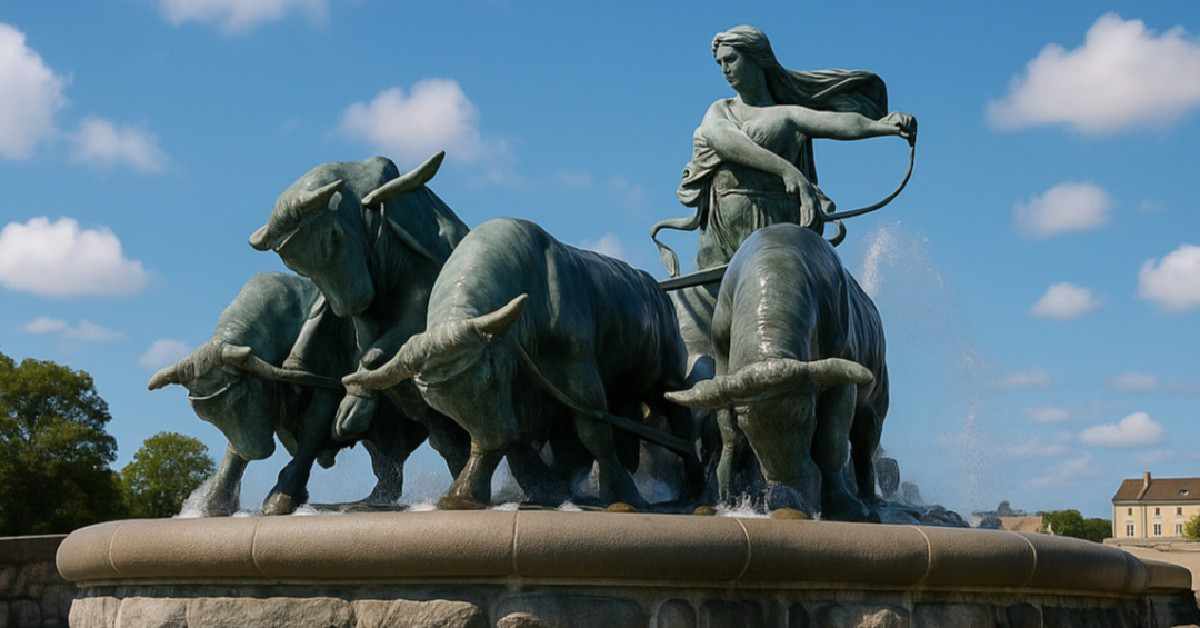
The Gefion Fountain, or Gefionspringvandet in Danish, is the largest monument in Copenhagen. It shows the Norse goddess Gefion driving four straining oxen as water roars around them. The composition captures a single violent moment of creation in mid-motion.
It sits in Churchillparken on the harbour, framed by the spire of St. Alban’s Anglican Church behind it. The setting is one of the most photographed corners of the city. I think it beats the Little Mermaid for sheer drama, and I am not alone in that.
The Norse Myth Behind the Gefion Fountain
The story comes from Snorri Sturluson and his 13th century Prose Edda. King Gylfi of Sweden offered the goddess Gefion as much land as she could plow in one night. She was not about to waste the chance.
Gefion turned her four sons into oxen and harnessed them to a plow. They tore so deep that she dragged an entire chunk of land into the sea. According to Norse legend, that land became Zealand, the island Copenhagen sits on today.
The Lake Left Behind
The hole she left in Sweden filled with water. Most tellings say it became Lake Mälaren, near Stockholm. It is a tidy myth, a creation story that ties Denmark and Sweden together across the water.
Bundgaard froze the most dynamic second of that legend. The oxen heave forward, nostrils flared, while Gefion cracks the whip above them. As a piece of national-romantic art, it is pure theatre, and it works.
Who Built the Gefion Fountain and Why
The fountain was paid for by the Carlsberg Foundation. It marked the brewery’s 50th anniversary, a gift to the people of Copenhagen. Beer money built one of the city’s defining landmarks, which feels very Danish to me.
This was no isolated act of generosity. The Carlsberg founders poured fortunes into Danish art and science. The same family money sits behind the Ny Carlsberg Glyptotek, another reason to thank brewers for Copenhagen’s culture.
A Statue That Almost Went to Paris
Bundgaard’s design was first meant for the 1900 Paris World Exhibition. It was not finished in time. Copenhagen got to keep it instead, and the fountain was finally unveiled in 1908.
The water system took longer to sort out. According to historical records, the fountain did not fully flow until 1908, years after the figures were cast. Big public projects ran late even then.
What the Gefion Fountain Looks Like Up Close
The sculpture group is cast in bronze and set on blocks of Norwegian granite. The goddess and her four oxen dominate the upper basin. Water cascades down through several levels into a wide pool below.
Stand close and the detail rewards you. You see the tension in the oxen’s muscles and the spray catching the light. It is one of the best photography subjects in the city, especially in late afternoon.
When the Water Runs
The fountain does not flow year-round. The water is usually switched off through the coldest winter months to protect the pipes from frost. It typically runs from spring into autumn.
If you visit in January, expect a dry monument. The bronze still looks magnificent, but the drama lives in the moving water. Plan around that if the cascade is what you came for.
Visiting the Gefion Fountain in Copenhagen
The Gefion Fountain sits in Indre By, on the edge of the harbour. It is a short, flat walk from the Little Mermaid and the historic Kastellet fortress. Most visitors hit all three in one loop.
I always tell people to combine it with Langelinie and the nearby harbour gardens. The whole stretch makes a perfect morning. It is also a natural stop on any one day in Copenhagen route.

How to Get There
The nearest train station is Østerport, about a 10-minute walk away. Buses run frequently through the area, including lines toward Indre By. The full public transport network makes it easy to reach.
Copenhagen is a cyclist’s city, so renting a bike is my favorite option. The harbour route is flat and scenic. Read our guide to cycling in Copenhagen before you set off.
Best Time to Visit
The warmer months from May to September are ideal. The water runs, and long Nordic daylight stretches the golden hour. Early morning means fewer crowds and softer light.
Evening visits have their own magic when the fountain is lit. A guided walk can add the backstory if you want context. Check options for guided tours in Copenhagen that include the harbour landmarks.
Why the Gefion Fountain Still Matters
The Little Mermaid gets the postcards, but I think she undersells the city. She is small, passive, and easy to miss. The Gefion Fountain is the opposite, a goddess bending the land to her will.
That contrast says something about how Copenhagen markets itself. The quiet icon wins the headlines, while the bold one waits a few hundred meters away. For my money, the fountain is the more honest symbol of a city that built itself from the sea. It belongs on any list of what Copenhagen is famous for.
A Free Landmark in an Expensive City
Copenhagen is not cheap, as any expat learns fast. The fountain costs nothing, which makes it a rare free pleasure. You can stand there for an hour and spend not a single krone.
That matters when the rest of the day drains your wallet. Add it to your things to do in Copenhagen and you get real value. It is history, art, and myth for the price of a walk.
FAQs About the Gefion Fountain
When was the Gefion Fountain built?
The Gefion Fountain was completed and unveiled in 1908. The sculptor Anders Bundgaard designed it, and the Carlsberg Foundation funded it for the brewery’s 50th anniversary. The water system became fully operational the same year.
What is the story behind the Gefion Fountain?
It depicts the Norse goddess Gefion plowing the island of Zealand from Sweden. King Gylfi promised her all the land she could plow in one night. She turned her four sons into oxen and dragged the land into the sea.
Is the Gefion Fountain free to visit?
Yes, the Gefion Fountain is completely free. It sits in Churchillparken, a public space on the Copenhagen harbourfront. You can visit at any time of day, all year round.
How do I get to the Gefion Fountain?
The fountain is near Kastellet and the Little Mermaid, in Indre By. Walk roughly 10 minutes from Østerport station, or take a local bus. The area is very bicycle-friendly for those who prefer to ride.
Why is the Gefion Fountain named after a goddess?
Gefion is a Norse goddess linked to plowing and fertility. The myth credits her with creating Zealand, the island Copenhagen sits on. The fountain honors that legend at the city’s harbour edge.
Does the Gefion Fountain always have water running?
No, the water is usually turned off during the coldest winter months. This protects the pipes and structure from frost damage. It typically flows from spring through autumn, so summer is the best time for the full effect.
Sources and References
Wikipedia: Gefion Fountain Wikipedia: Gefjon Wikipedia: Prose Edda VisitCopenhagen: Gefion Fountain Carlsberg Foundation